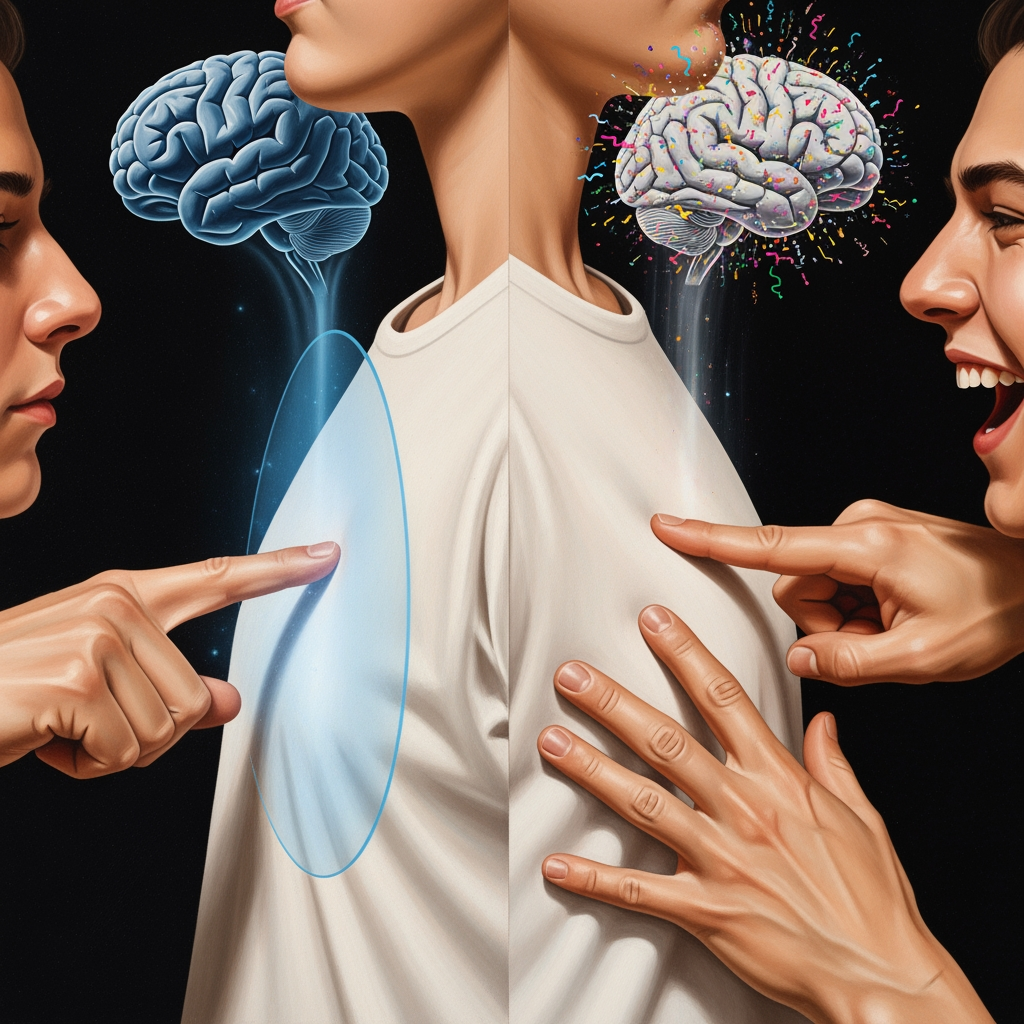
Try it right now: tickle your own feet or ribs. Nothing happens. But let someone else do the same thing, and you'll squirm. The reason reveals fascinating details about how your brain processes sensory information.
The Cerebellum's Role
Your cerebellum predicts the sensory consequences of your own movements. When you move your hand toward your side, your brain anticipates the touch before it happens. This prediction cancels out the tickle sensation.
The Element of Surprise
Tickling requires unpredictability. When someone else touches you, your brain can't accurately predict exactly when, where, or how hard the contact will occur. This uncertainty triggers the tickle response and often involuntary laughter.
Evolutionary Theories
Some researchers believe ticklishness evolved as a defense mechanism, training us to protect vulnerable body parts. Others suggest it promotes social bonding, particularly between parents and children. The laughter response encourages repeated interaction.
The Robot Experiment
Scientists built a machine that tickles people with a slight delay between their hand movement and the actual touch. With even a short delay, people could tickle themselves. The added unpredictability restored the sensation.
This article was generated by AI to provide informational content.