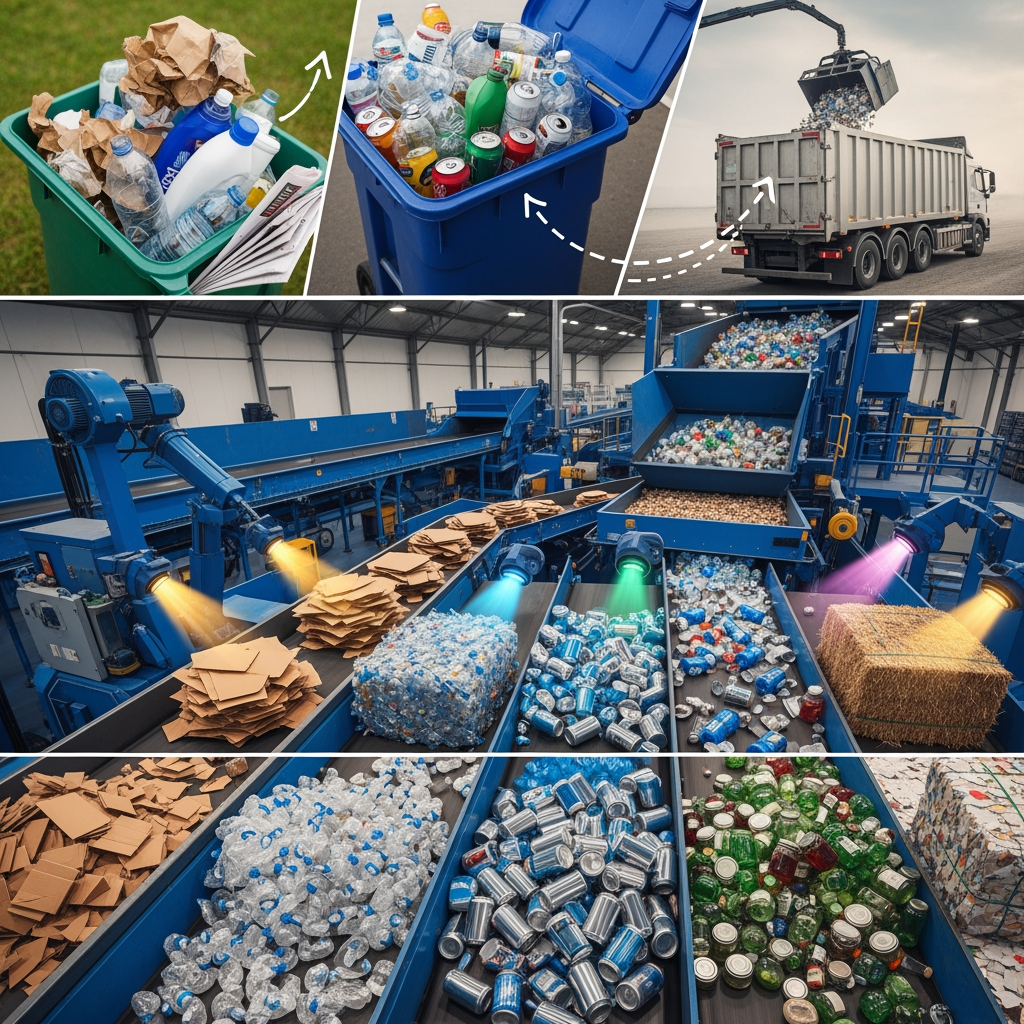
You sort your bottles, cans, and cardboard dutifully each week. But once the truck drives away, what actually happens to all that material?
The Sorting Facility
Your mixed recycling arrives at a Materials Recovery Facility, or MRF. Here, a combination of machines and workers separate materials by type. Screens catch paper and cardboard while heavier items fall through. Magnets pull out steel cans. Optical sensors identify different plastic types.
Contamination Problems
When non-recyclable items mix with recyclables, entire batches can become unusable. Food residue, plastic bags, and items smaller than a credit card cause the most problems. Some facilities reject loads with contamination rates above 10%.
Where Materials Actually Go
Sorted materials get baled and sold to manufacturers. Aluminum becomes new cans within 60 days. Glass gets crushed and melted into new containers or used in road construction. Paper transforms into cardboard, tissue products, or insulation. Plastics face a more complicated journey, with many types difficult to process economically.
The Global Trade
Recycling operates as a commodity market. Prices fluctuate based on demand, and materials sometimes travel across oceans to reach processing facilities. Recent policy changes in China have disrupted this system significantly.
This article was generated by AI to provide informational content.