The ground shakes, buildings sway, and then it's over. Understanding the mechanics of earthquakes reveals why they vary so dramatically in destructive power.
Tectonic Plate Stress
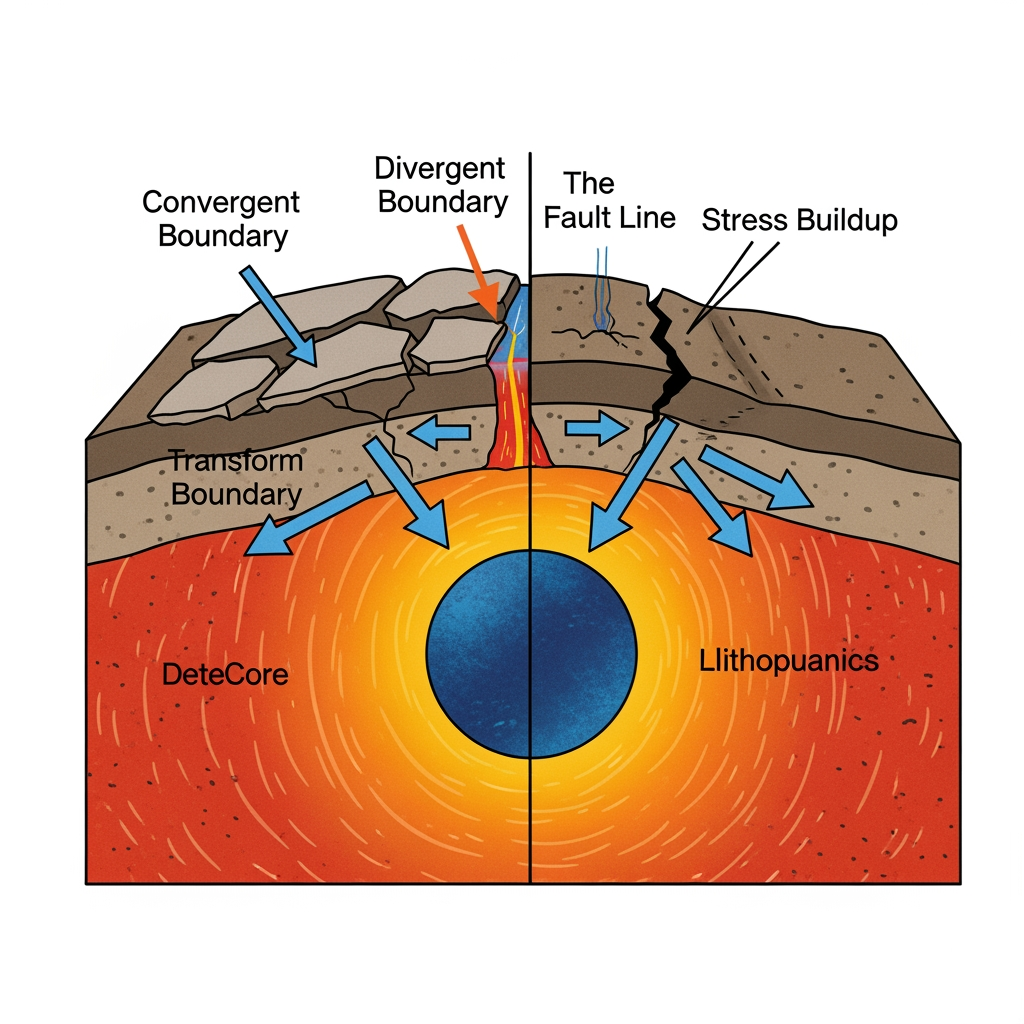
Earth's crust consists of massive plates that constantly move, typically a few inches per year. Where plates meet, they push against, pull apart from, or slide past each other. Friction locks them together until stress exceeds the friction threshold.
The Rupture Event
When stress overcomes friction, rocks suddenly shift along the fault line. This abrupt movement releases enormous energy accumulated over decades or centuries. The rupture may occur along a fault section just miles long or hundreds of miles long.
Seismic Waves
The energy radiates outward in waves. Primary waves compress and expand rock, arriving first but causing less damage. Secondary waves shake rock side-to-side and cause more destruction. Surface waves roll along the ground like ocean waves.
Duration and Magnitude
Strong shaking typically lasts ten to thirty seconds, though the rupture itself might continue for minutes on major faults. Magnitude measures total energy released. A magnitude 7 earthquake releases 32 times more energy than a magnitude 6.
Aftershocks
The initial rupture leaves surrounding rock stressed in new patterns. These areas may fail in subsequent, smaller earthquakes. Aftershocks can continue for months, gradually decreasing in frequency and magnitude.
This article was generated by AI to provide informational content.