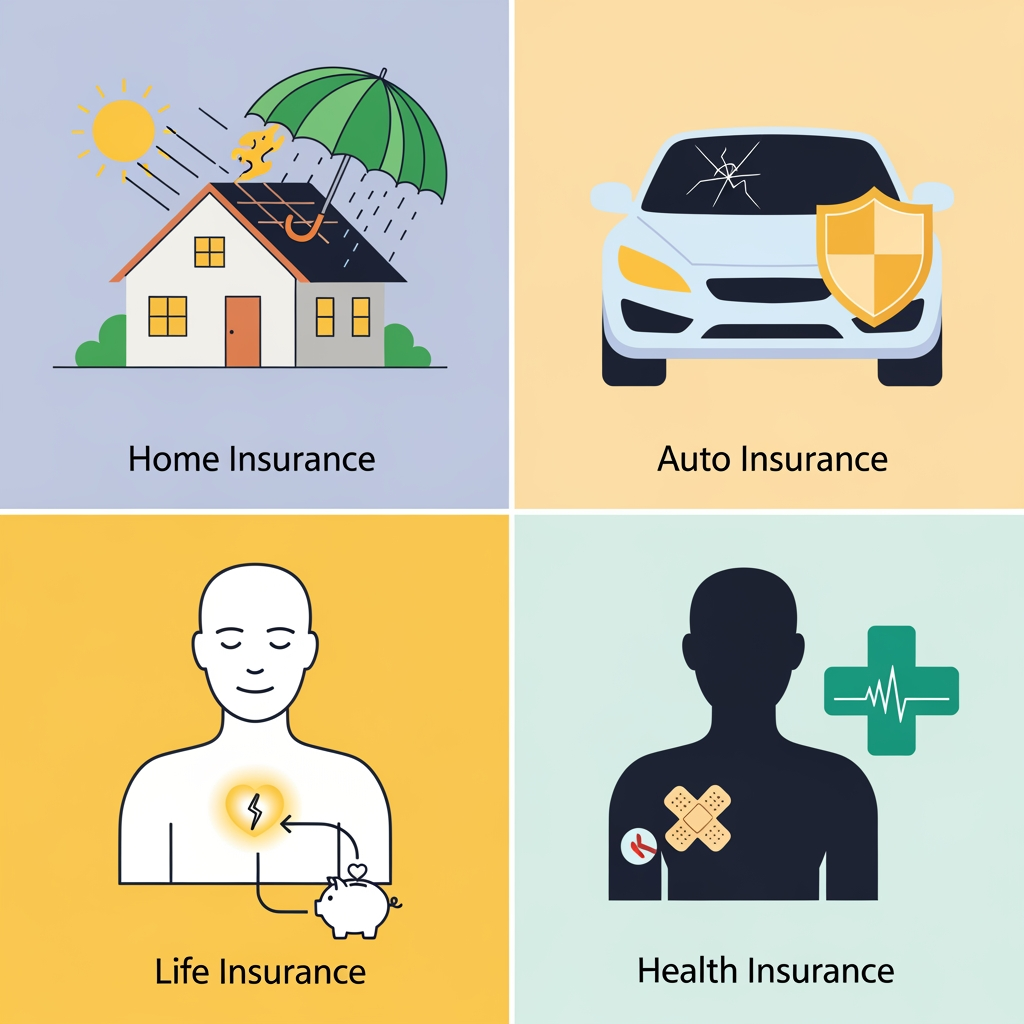
Insurance protects against financial catastrophe, but the variety of coverage types creates confusion. Understanding what each type covers helps you make informed decisions about protection.
Health Insurance
Covers medical expenses from doctor visits to hospitalizations. Key factors include premiums (monthly cost), deductibles (what you pay before coverage kicks in), copays (fixed amounts per visit), and networks (which providers accept the insurance).
Auto Insurance
Liability coverage, required in most states, pays for damage you cause to others. Collision covers damage to your car from accidents. Comprehensive covers non-collision damage like theft or weather. Uninsured motorist coverage protects against drivers without insurance.
Homeowners Insurance
Protects your home structure, personal belongings, and provides liability coverage if someone is injured on your property. Flood and earthquake damage typically require separate policies. Review coverage limits to ensure they match replacement costs.
Life Insurance
Term insurance provides coverage for a specific period at lower premiums. Permanent insurance lasts lifetime but costs more. The purpose is replacing income for dependents, not investment—keep insurance and investment goals separate.
Disability Insurance
Replaces income if illness or injury prevents working. Often overlooked but statistically more likely to be needed than life insurance before retirement age. Employer plans may have limitations; individual policies offer more comprehensive coverage.
This article was generated by AI to provide informational content.