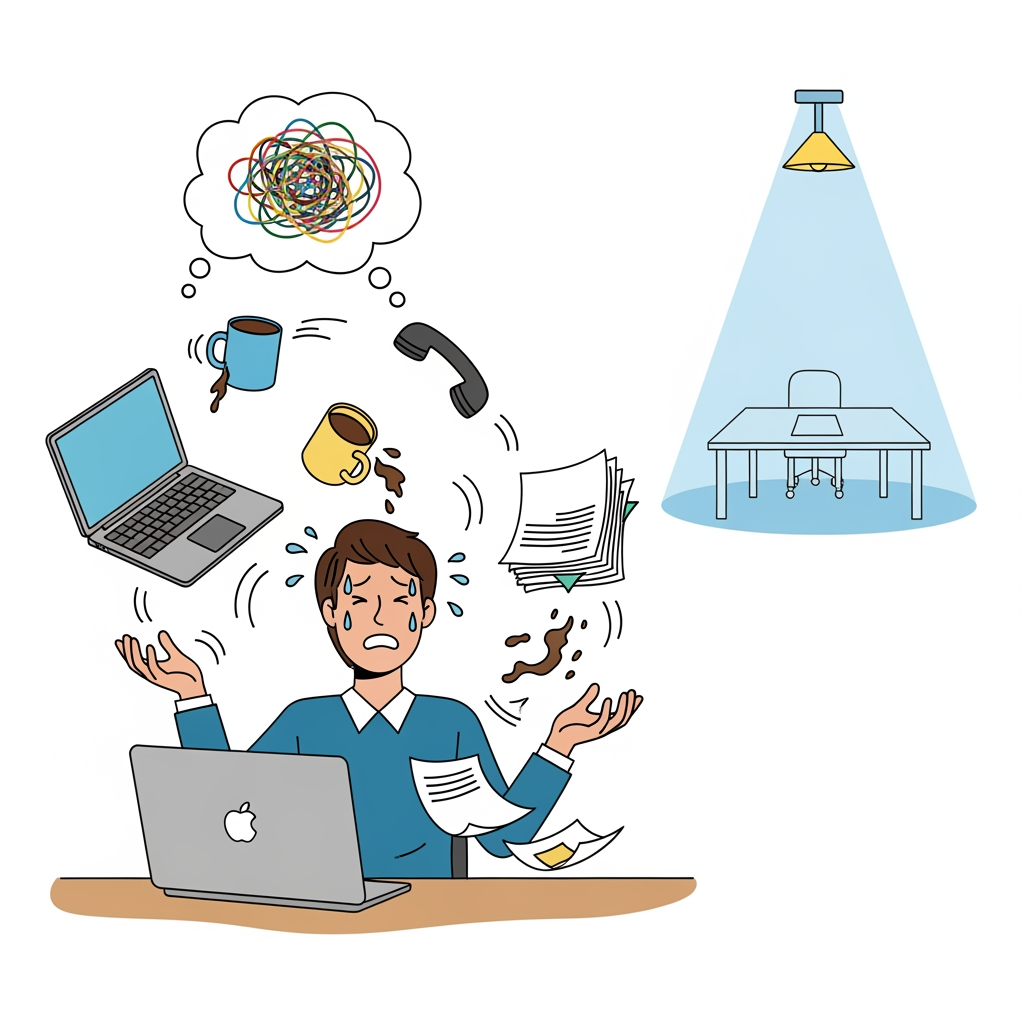
Proud of your ability to juggle multiple tasks? Neuroscience has bad news: what you call multitasking is actually rapid task-switching, and it's making you less productive.
What Your Brain Actually Does
True parallel processing—doing two cognitive tasks simultaneously—is impossible for the human brain. Instead, your brain switches attention between tasks rapidly. Each switch carries a cost in time and mental energy.
The Switching Tax
Research shows it takes an average of 23 minutes to fully regain focus after an interruption. Brief switches might seem harmless, but the accumulated cost adds up. Heavy multitaskers complete tasks more slowly and make more errors.
The Illusion of Productivity
Multitasking feels productive because it's stimulating. The constant novelty triggers small dopamine releases, making it enjoyable despite being ineffective. This creates a false sense of accomplishment.
When Multitasking Works
Combining a cognitive task with an automatic one works fine: walking while talking, or folding laundry while listening to a podcast. Neither task requires full attention, so they don't compete for the same mental resources.
Better Approaches
Time blocking dedicates specific periods to single tasks. Batching groups similar activities together. Both approaches respect your brain's limitations rather than fighting them.
This article was generated by AI to provide informational content.