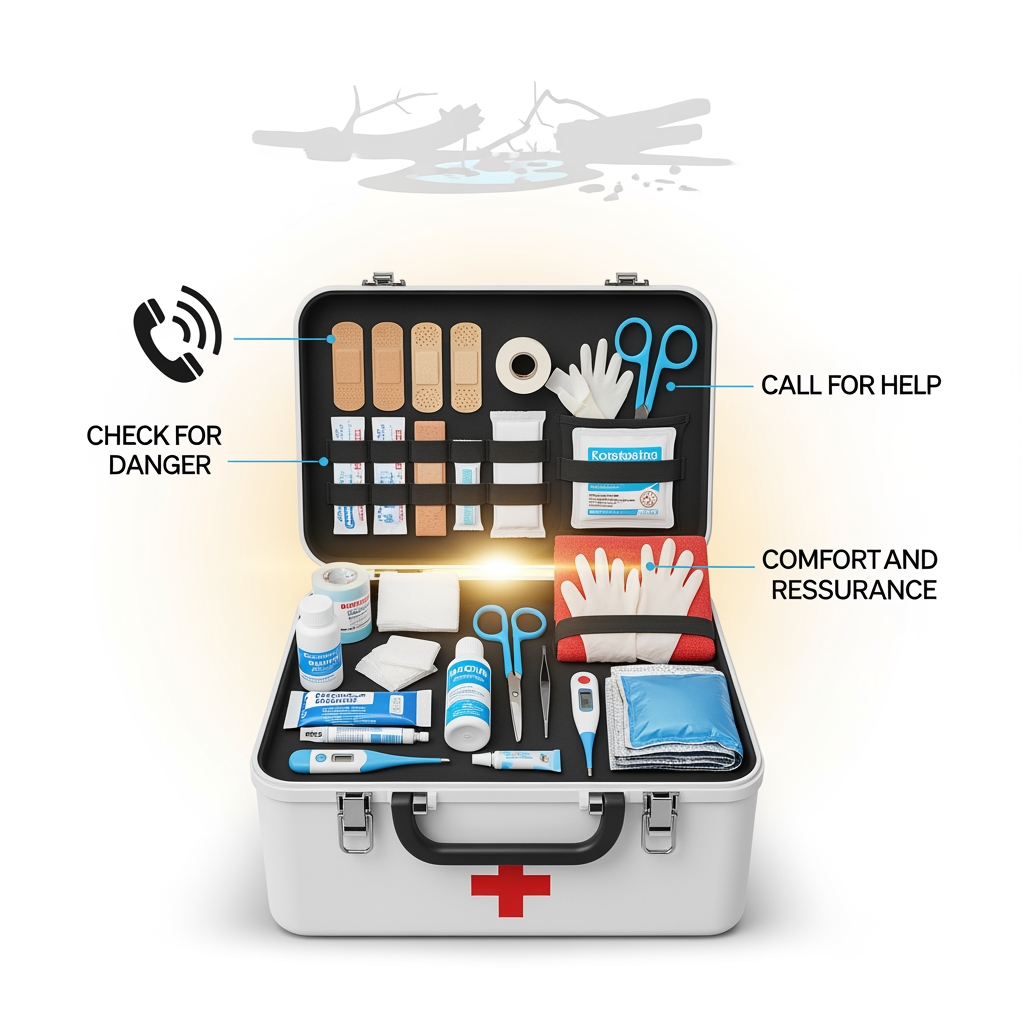
Emergencies don't wait for professionals to arrive. Knowing basic first aid can stabilize someone's condition and potentially save lives during critical minutes.
Assessing the Situation
Before helping, ensure the scene is safe. Check if the person is conscious by gently tapping their shoulder and asking if they're okay. Call emergency services immediately for serious injuries or unresponsiveness.
Controlling Bleeding
Apply direct pressure with a clean cloth. Elevate the injured area above heart level if possible. Don't remove the cloth if blood soaks through—add more layers on top. Most bleeding stops with sustained pressure.
CPR Basics
For unresponsive adults not breathing normally: place heel of hand on center of chest, interlock fingers, push hard and fast at least two inches deep, about 100-120 compressions per minute. If trained, give rescue breaths between compressions.
Choking Response
For conscious adults: stand behind them, make a fist just above the navel, grasp with other hand, and deliver upward thrusts. Repeat until the object dislodges or the person becomes unconscious.
Treating Burns
Cool the burn under running cool water for at least ten minutes. Don't use ice, butter, or other home remedies. Cover loosely with clean bandage. Seek medical attention for burns larger than your palm or on face, hands, or joints.
Take a Course
Reading about first aid helps, but hands-on training builds confidence and muscle memory. Red Cross and other organizations offer courses that certify you in essential techniques.
This article was generated by AI to provide informational content.