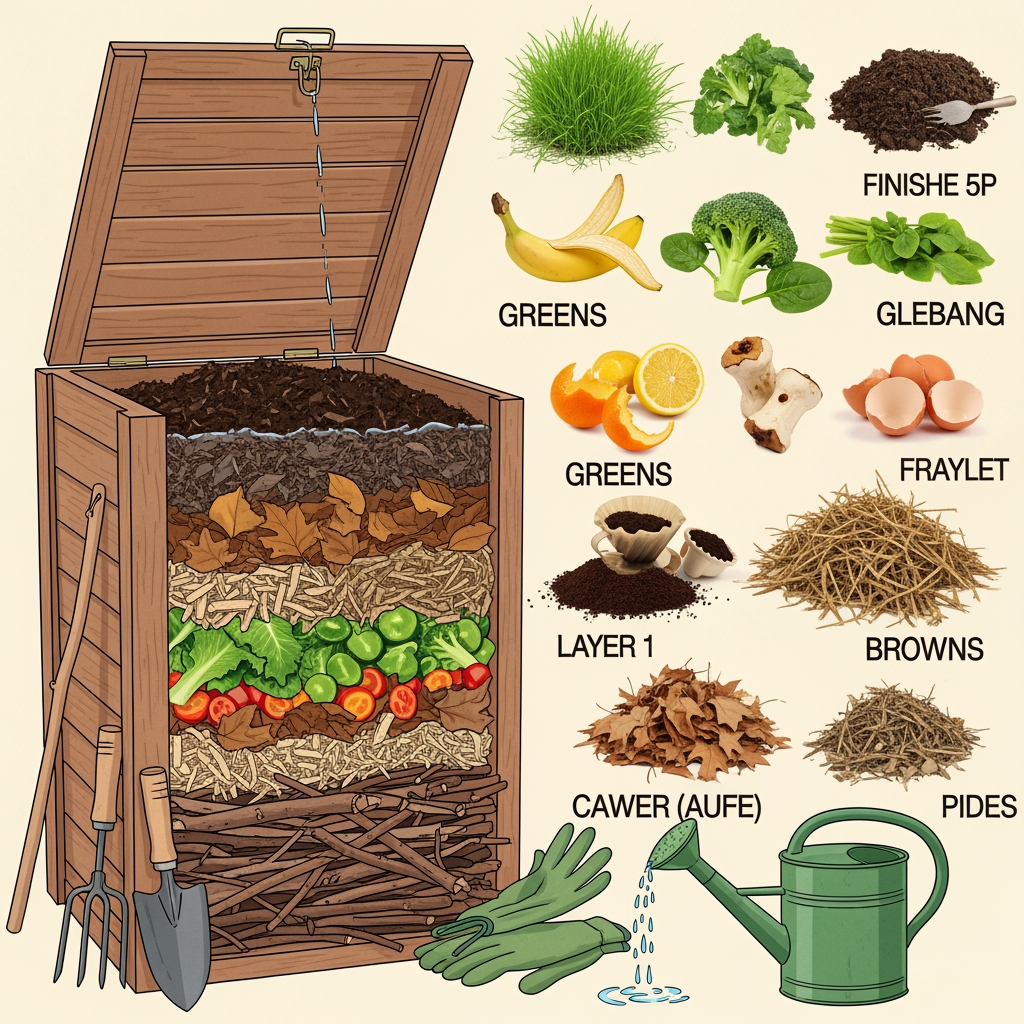
Composting transforms kitchen scraps and yard waste into rich soil amendment while reducing the trash you send to landfills. Anyone can do it, even with limited space.
What Can Be Composted
Greens include fruit and vegetable scraps, coffee grounds, fresh grass clippings, and plant trimmings. Browns include dry leaves, cardboard, paper, straw, and wood chips. Avoid meat, dairy, oils, and pet waste, which attract pests or contain harmful pathogens.
The Balance Matters
Healthy compost needs roughly three parts brown to one part green. Browns provide carbon, greens provide nitrogen. Too many greens create a smelly, wet mess. Too many browns slow decomposition to a crawl.
Methods for Different Spaces
Traditional bins work for yards. Tumbling composters speed the process with easy turning. Bokashi systems ferment scraps indoors using special bran. Vermicomposting uses worms in contained bins, perfect for apartments.
Troubleshooting Common Problems
Bad smells mean too much green material or not enough air. Add browns and turn the pile. Slow decomposition means the pile may be too dry or lack greens. Add water and nitrogen-rich materials. Pests indicate you're adding inappropriate materials.
Using Finished Compost
Finished compost looks like dark, crumbly soil and smells earthy. Mix it into garden beds, use it as mulch, or make compost tea for liquid fertilizer.
This article was generated by AI to provide informational content.